Disclosure: Some links on this page go to companies that run affiliate programs. If ChocolateLabs.com joins those programs, we may earn a commission at no extra cost to you. It never changes what we recommend. Read our disclosure.
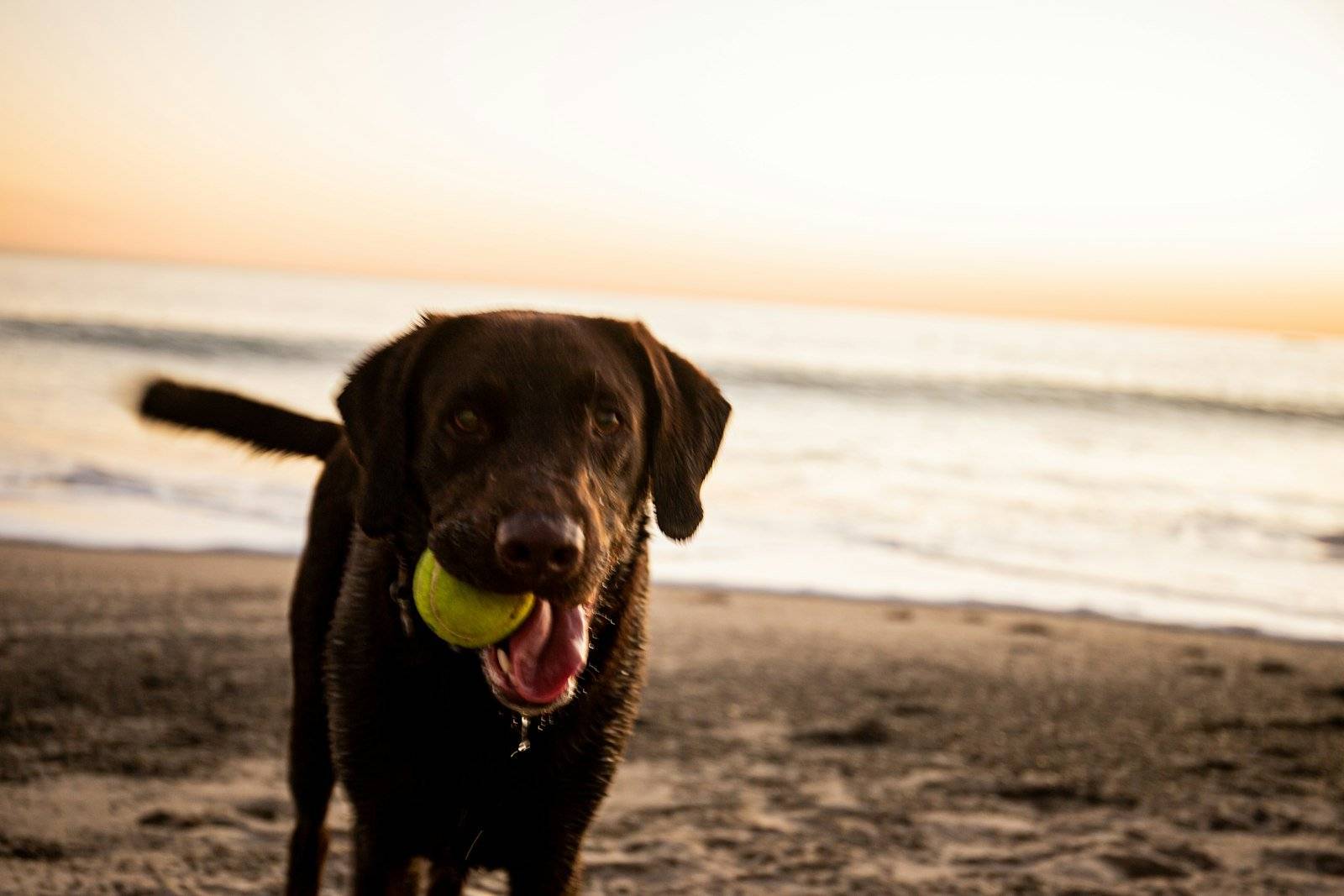
Adult Labs typically need substantial daily activity — walks plus retrieving or swimming — but exact minutes vary by age and line. Field-bred Labs need more. Puppies need shorter sessions and free play, not long runs, while joints are growing. Answer page →
Do all Labs love water?
Many Labs have a strong retrieving and swimming drive, but not every individual likes water. Introduce lakes and pools gradually, use a well-fitted life vest in deep or cold water, and dry the ears afterward to lower the risk of infection. Answer page →
Exercise guide by age
Age
Daily activity (guideline)
Best activities
Avoid
8 wk – 6 mo
Several short play and training sessions
Free play on grass, short sniffy walks, gentle retrieves
Jogging long distances until a vet OKs it (growth plates)
1.5 – 7 yr
60–120 min
Swimming, retrieving, hiking, scent games
Hard exercise in heat
7 yr +
30–60+ min, lower impact
Swimming, shorter walks, puzzle feeders
Sudden weekend-warrior efforts
These ranges are guidelines drawn from breed energy level and vet consensus, not prescriptions. Your vet can tailor them, especially for dogs with joint issues.
Puppy joints: what the evidence suggests
A Norwegian cohort study of Labs and other large breeds found that puppies with off-leash exercise on soft ground in parks before 3 months had a lower risk of hip dysplasia. Puppies who climbed stairs daily in early life had a higher risk (Krontveit et al., 2012). Free play is good. Forced, repetitive impact is the concern.
Mental exercise counts
A 15-minute training or sniffing session tires a Lab surprisingly well. Snuffle mats, stuffed KONG toys and brain games are especially useful on rainy days and for dogs on post-surgery rest.
Warning signs to stop
Wobbly hind legs or collapse after 5–20 minutes of intense retrieving could be EIC, a genetic condition common in Labs. Stop and cool the dog. See EIC.
Heavy panting, bright red gums, stumbling in heat may be heatstroke. This is an emergency; cool the dog and call a vet.
Limping after play often points to a soft-tissue strain or the cruciate ligament.
Tracking activity
If you want data, a GPS collar with an activity tracker (for example Fi) logs daily steps and alerts you if an escape artist gets loose. Compare options in best GPS collars for Labs.
Frequently asked questions
How much exercise does an adult Lab need?
Most healthy adult Labs do well with roughly 1–2 hours of activity a day, split between walks, retrieving or swimming, and some mental work. Working-line dogs often need more.
Is the 5-minutes-per-month puppy rule real?
It's a popular rule of thumb, not a research finding. Moderate free play on soft ground is generally fine. Avoid forced, repetitive, high-impact exercise until growth plates close.
Best GPS Collars for Labrador Retrievers Fi vs Tractive for Labs: how each tracker works, subscription requirements, waterproofing questions for swimmers, and how to pick the right one.
How to Stop Your Lab Pulling on the Leash A 3-phase, reward-based plan for loose-leash walking with a strong Lab, plus the right harness and what to do when your Lab lunges at squirrels.