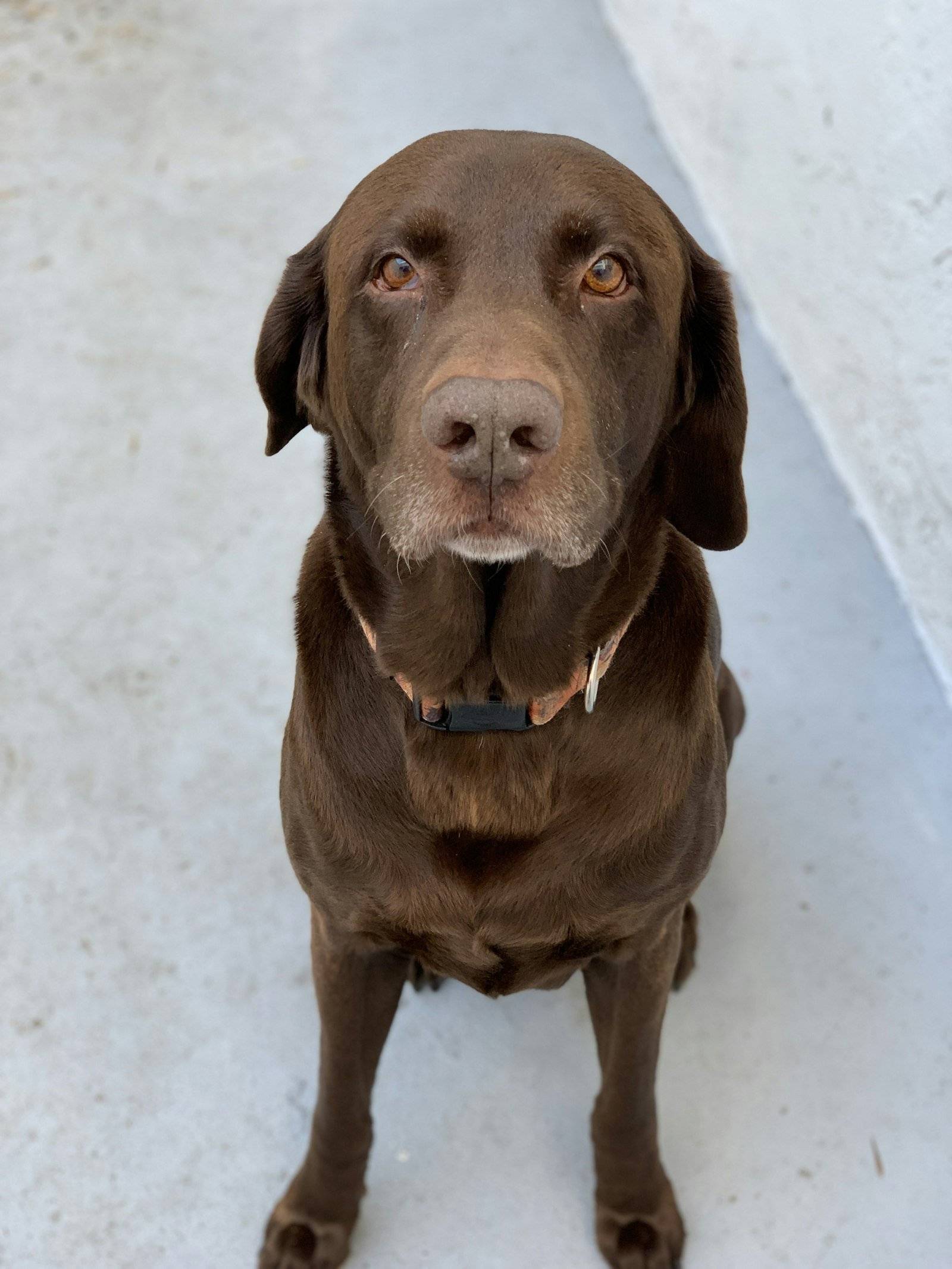
Color doesn’t change size. A chocolate Lab is built to the same breed standard as black and yellow Labs. The numbers below come straight from the AKC standard. Remember they describe dogs in working condition, meaning lean.
Breed-standard size chart
| Male | Female | |
|---|---|---|
| Height at withers | 22½–24½ in | 21½–23½ in |
| Weight (working condition) | 65–80 lb | 55–70 lb |
| Coat | Short, straight, dense, weather-resistant double coat | Same |
| Colors allowed | Black, yellow, chocolate (solid) | Same |
| Eyes (chocolate) | Brown or hazel | Same |
| Eye rims & nose (chocolate) | Brown | Same |
Under the AKC standard, a height more than ½ inch outside these ranges is a disqualification in the show ring. That matters for breeding dogs, not for pets.
Weight in real life
Many pet Labs weigh more than the standard because they’re overweight, not “big-boned”. In the large UK VetCompass study of 33,320 Labs, overweight/obesity was the second most common recorded problem (McGreevy et al., 2018). Judge your dog by body condition, not the scale: you should be able to feel the ribs easily under a thin fat layer, and the dog should have a visible waist from above. Our weight guide shows the 9-point body condition scale, and the calorie calculator turns a target weight into daily calories.
Shades of chocolate
Chocolates range from a light milk-chocolate brown to a deep liver. Every shade comes from the same recessive bb genotype. The shade differences are normal variation, not separate colors. “Silver” Labs are a different matter: their dilute coat comes from a separate gene, which is covered in silver, charcoal and champagne Labs.
Show (English) vs field (American) build
| Trait | Show / bench lines | Field / working lines |
|---|---|---|
| Head | Broader skull, pronounced stop | Narrower, longer muzzle |
| Body | Stockier, deeper chest | Leaner, longer legs |
| Tail | Thick “otter” tail | Often thinner |
| Energy | Usually calmer as adults | Higher drive, needs more work |
These are general tendencies, not rules. Ask a breeder for the parents’ weights. Then use our puppy growth calculator to estimate your puppy’s adult size.